Psychedelic integration is the work that follows an experience. The term is used for many different things: a conversation, a journal, a change in routine, therapy, a group or a structured programme. There is no single method that everyone needs to follow.
At Reweave, integration means paying attention to what happens afterwards and giving yourself time before deciding what any of it means. It begins after the experience. It does not include advice about obtaining, preparing or taking a psychedelic.
Start with what you can observe
An experience may leave a clear account, a few fragments or no story you can put into words. None of those forms settles how important it was.
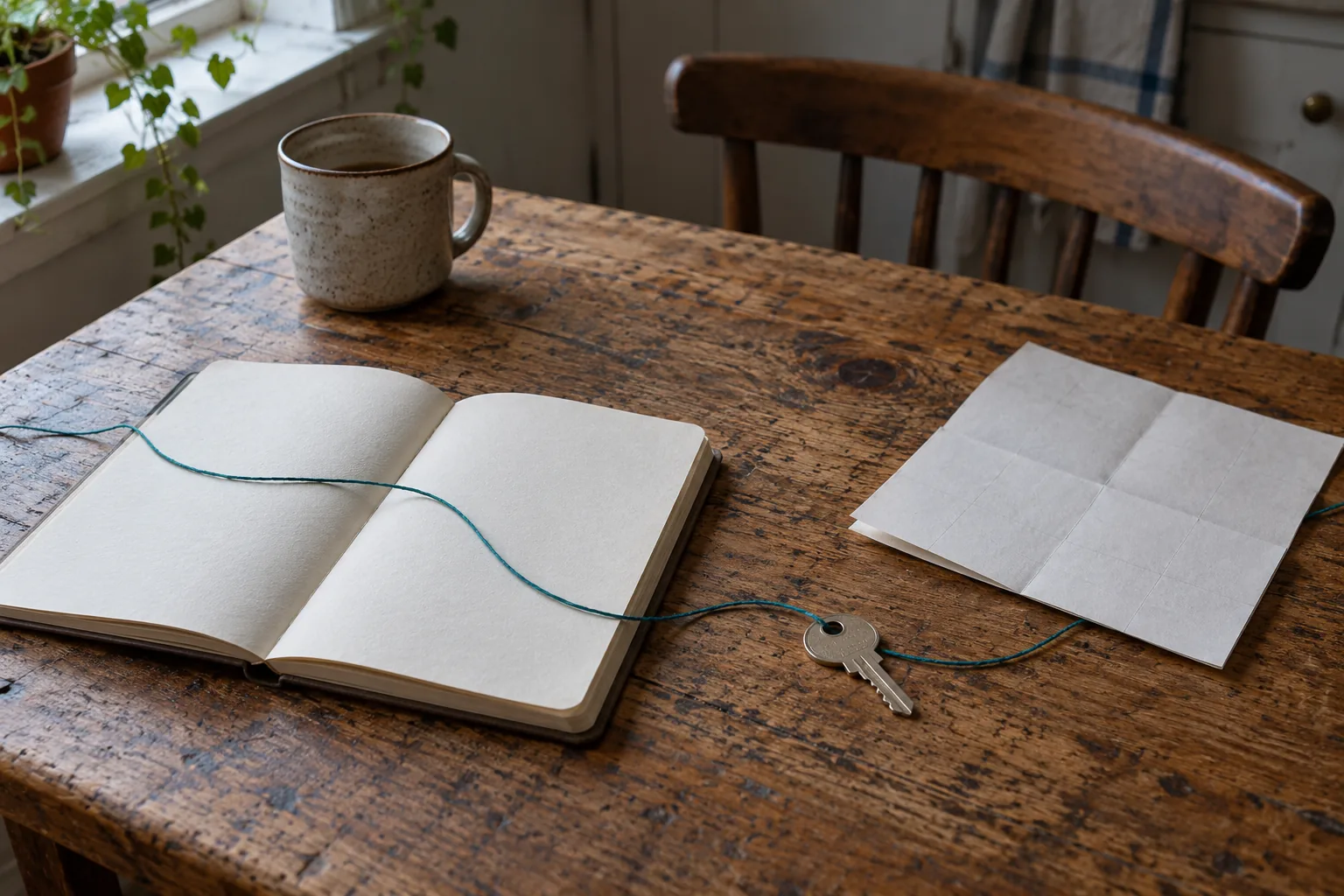
The first useful record can be ordinary: how you slept, what felt harder than usual, a conversation you keep returning to, or something you want to remember. Writing is one option. A private voice note, a sketch or no record at all may fit better. A notebook, not a verdict has three prompts if you want somewhere concrete to begin.
Observation and interpretation can sit on separate lines. “I thought about leaving my job” records what happened. “The experience told me to resign” gives that thought an authority it may not deserve. Waiting lets later days add information.
Compare more than one day
The day after an experience can feel unusually close to it. A month later, work, relationships and old routines may look different again. Compare the two instead of asking the first day to settle it.
Some questions are worth repeating. What changed? What stayed the same? What did you try, and what happened when ordinary life met it? A repeated check does not prove that the experience caused a later change. It gives you something more specific than memory alone.
If the first days are where you are now, read The day after. If time is tight, Integration when life is full starts with the week you already have.
Keep action small enough to reconsider
Some experiences arrive with urgency. A relationship must end. Work must change. A new commitment feels obvious.
Feeling urgent does not make a large decision safe or correct. For something non-urgent and hard to reverse, write it down and choose a date to look again. Smaller actions can be tested sooner. Ring someone. Move one regular commitment. Try a different morning for a week. Then decide whether to continue, change or stop.
This does not reduce the experience to a habit. It lets you see how an idea fits the life you already have. Big decisions can wait and Try it for a week offer two ways to do that.
Know when reflection is not enough
Integration is not a diagnosis, treatment or test of whether an experience went well. A journal or programme cannot replace qualified care.
If distress keeps returning, sleep is badly disrupted or daily life becomes hard to manage, contact your GP or another qualified professional. If you are in crisis or at risk of harm, contact your local emergency services or a crisis line in your area.
What Reweave means by integration
After psilocybin, someone may return with a story they can follow but find that its meaning shifts as ordinary life resumes. After 5-MeO-DMT, there may be no story at all, or only fragments that return later. Neither pattern says how much the experience mattered. They call for different places to begin.
You may work through some of this alone, speak with people you trust, use a structured programme or seek professional support. Those are different kinds of help.
Reweave keeps the psilocybin and 5-MeO-DMT routes separate. Each offers short sessions and check-ins paced over 90 days. Both ask you to record, compare and choose without telling you what the experience meant. How Reweave works explains what the programme offers and where it stops.
Research informs some questions and safety boundaries. It does not establish that Reweave will produce a particular result. The public programme pages show what is included, what comes before payment and where Reweave stops.